
Breaking the Code
It took a village at Bletchley Park

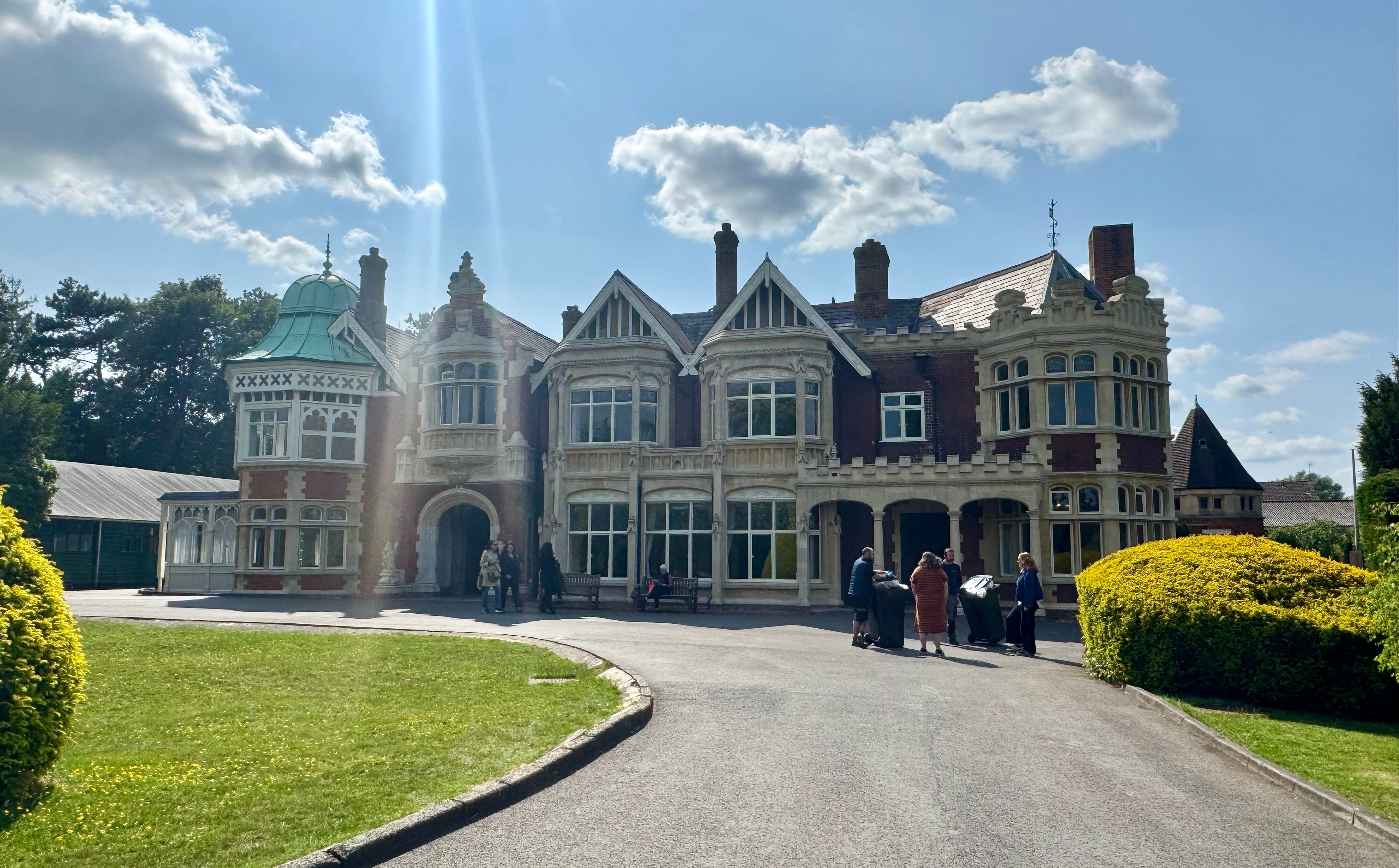
In our attempt to see as much of England as possible during our months here, and having the use of a rental car, we headed off for Bletchley Park, where cryptographers broke the German Enigma code during World War II.
Before the visit, my image of Bletchley Park was a small band of nerds — crossword puzzle fiends, mathematicians, and other scientists — toiling in a gentile English manor house. I had no idea that at its height, more than 9,000 people worked and lived on the 58-acre estate, with many out buildings, bicycles and even a tennis court. It was a veritable intelligence factory. Three-quarters of the workers were women.
In Hut 11, messages sent by the German military were decrypted using a Bombe — a machine (see video above) that automated the process of finding the daily key settings of the German Enigma machine. The Enigma machine worked by using a combination of rotors to convert each letter of a message into a different letter, so that the underlying message appeared like gibberish.
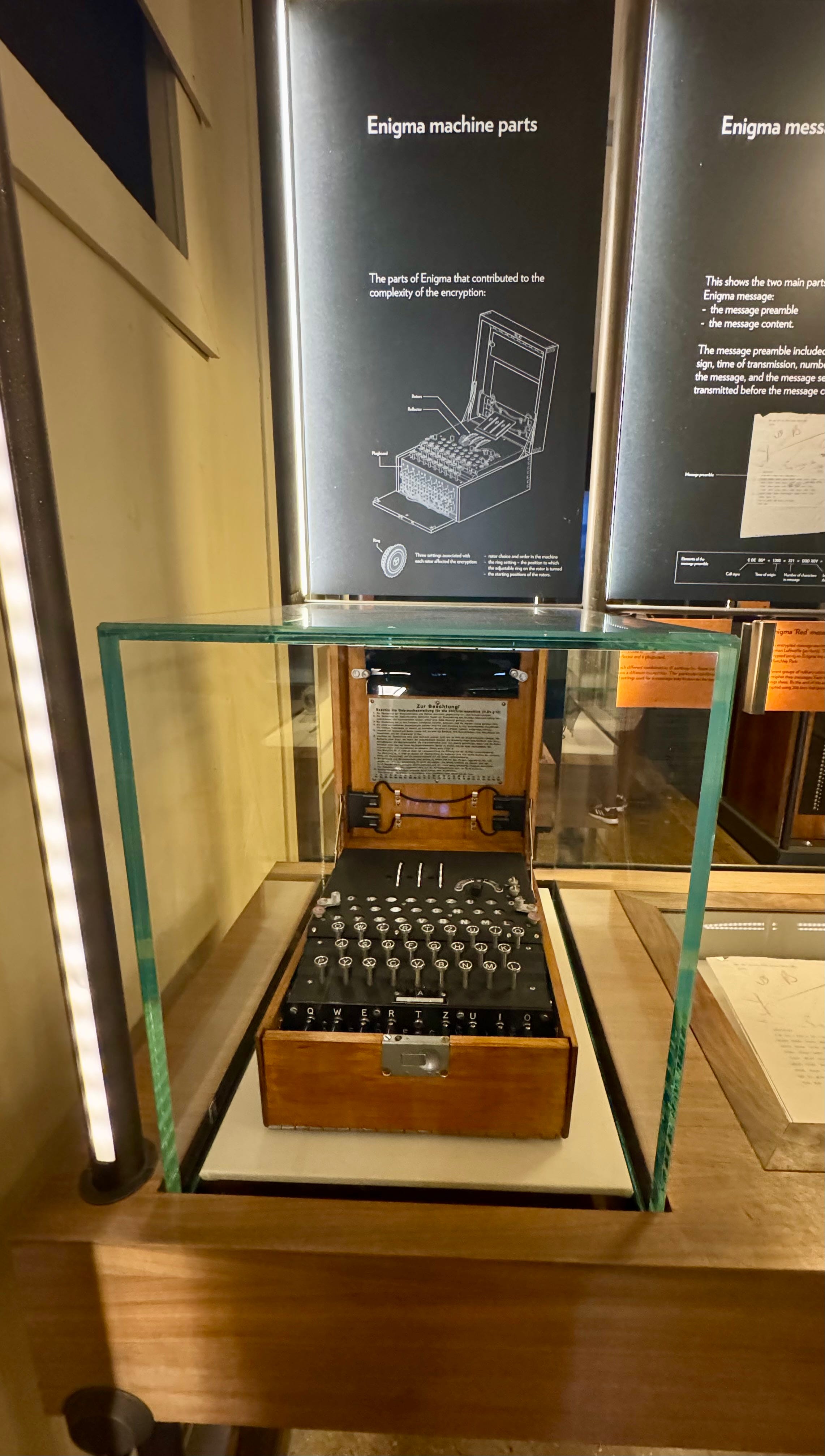
It took less than 12 minutes for a Bombe to test all 17,576 possible Enigma rotor positions. In other buildings, the messages were translated, analyzed and communicated to MI6, the British intelligence service.
The usefulness of this information cannot be minimized. The intelligence gathered at Bletchley Park affected the war on the ground, in the air and on the seas.
But what impressed me the most was the thought of thousands of people working together towards a meaningful common goal. In our polarized world, it is difficult to conceive of such an undertaking.
My Grandad installed their phone lines!
The option of not working together would be utter devastating failure. A common enemy can cause people to forget their petty differences and work for the good of the group or common goal. Sounded like a very interesting day-trip.